I. Types of Zippers
Zippers can be classified in various ways. Common types and their characteristics are as follows:
1. Classified by Material
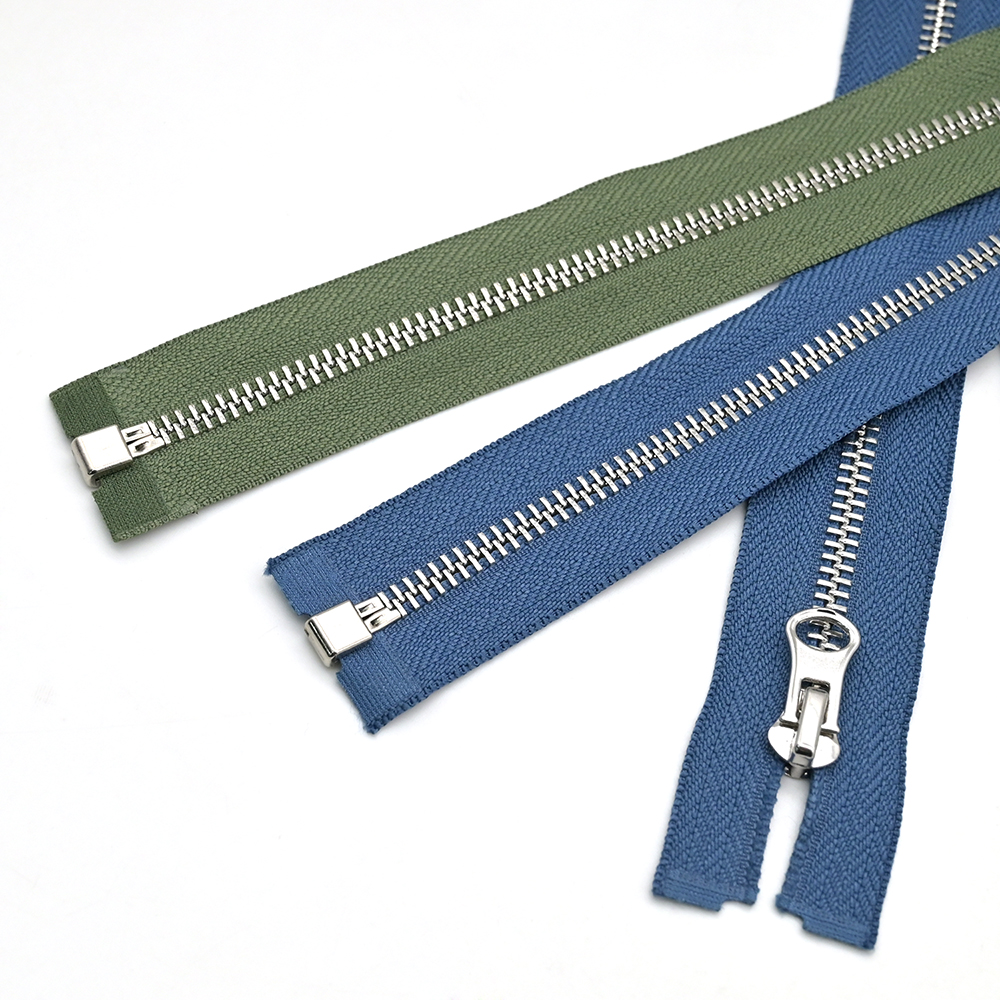
Metal Zippers
Material: Made from metals such as aluminum, copper, and nickel, and the surface can be plated.
Features: High strength and durability, but heavier, and may rust due to oxidation with long-term use.
Applicable scenarios: Denim clothing, leather goods, bags, and other products requiring high durability.
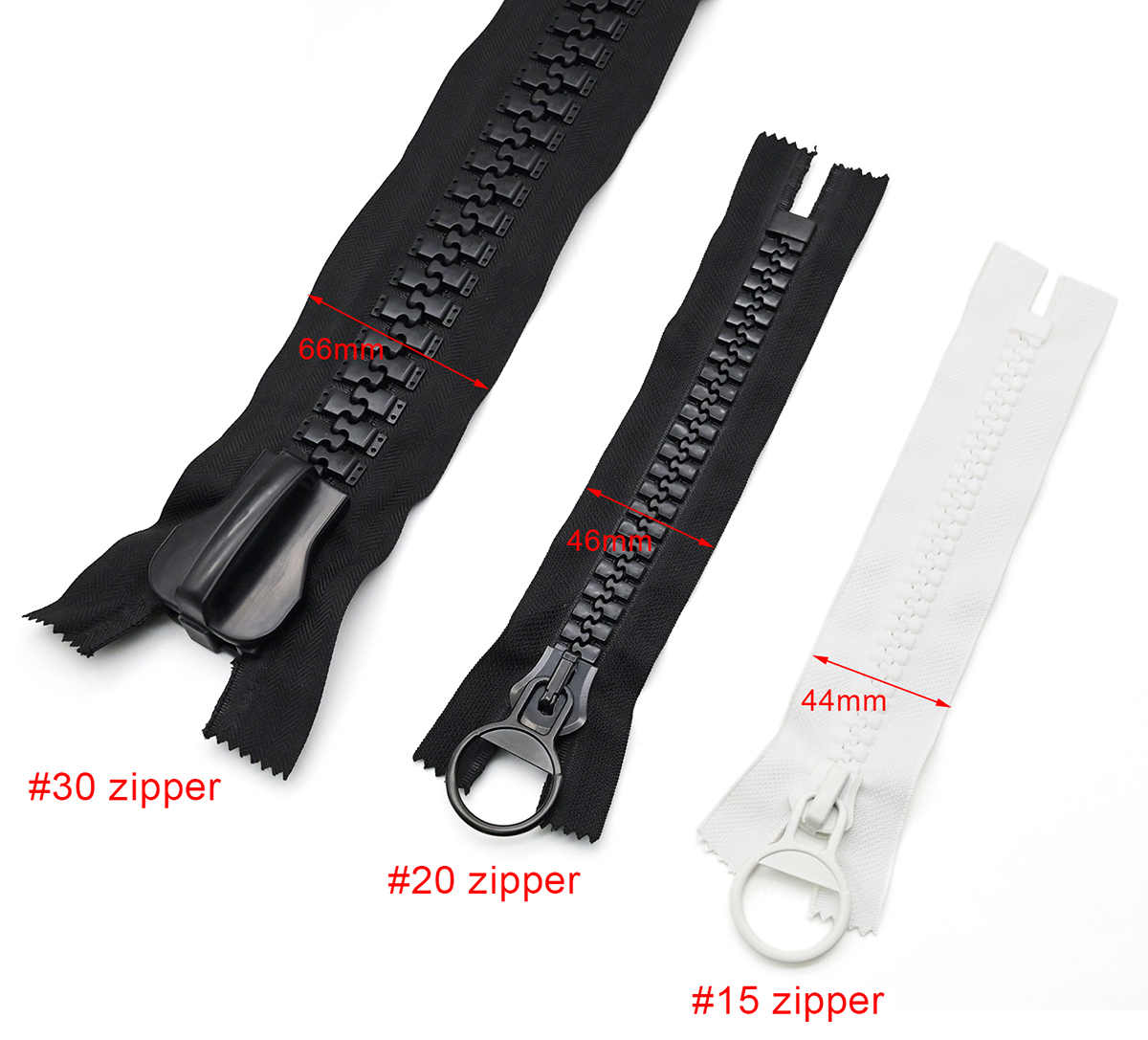
Resin Zippers (Injection Molded Zippers)
Material: Injection molded from plastics such as polyoxymethylene (POM).
Features: Lightweight, flexible, available in a wide range of colors, and washable, but the teeth are prone to falling off.
Applicable scenarios: Sportswear, jackets, down jackets, and other lightweight clothing.
Nylon Zippers
Material: Woven from polyester or nylon threads.
Features: Lightweight, wear-resistant, and elastic, suitable for manufacturing small-sized zippers.
Applicable scenarios: Lightweight clothing, children's clothing, tents, etc.
2. Classified by Structure
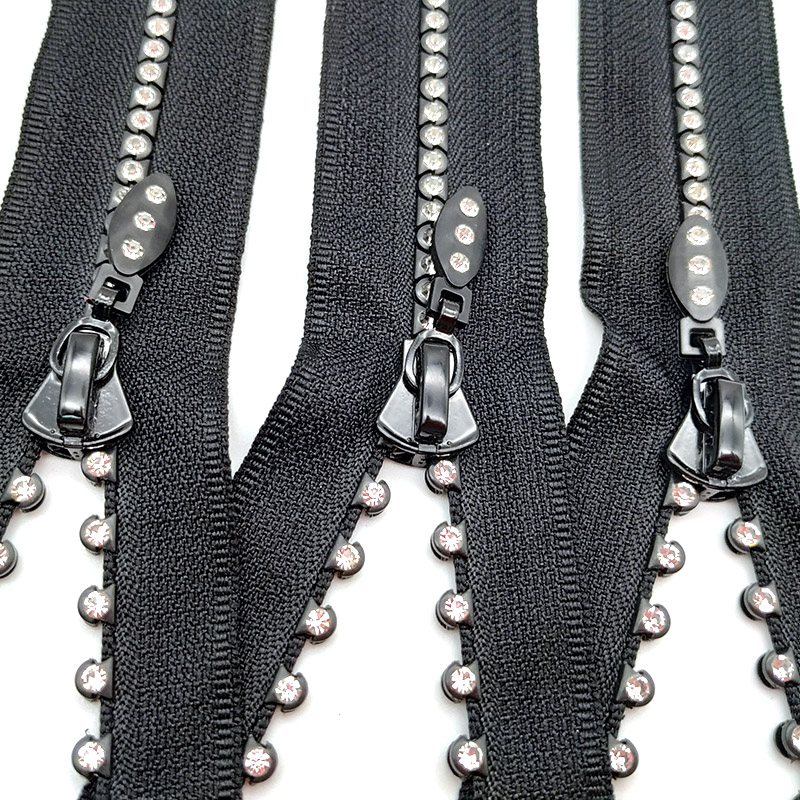
Closed-End Zippers
Features: One or both ends are closed and cannot be separated.
Subtypes: Single-ended closed-end (e.g., trouser and skirt openings), double-ended closed-end (e.g., clothing pockets).
Applicable scenarios: Clothing parts that need to be fixed and closed.
Open-End Zippers
Features: Both ends can be separated, making them easy to put on and take off.
Subtypes: Single-ended open-end (e.g., ski jacket front), double-ended open-end (e.g., large tents).
Applicable scenarios: Clothing or equipment that needs to be fully opened.
Invisible Zippers
Features: The zipper teeth are hidden under the fabric, resulting in a seamless appearance.
Applicable scenarios: Cheongsams, evening gowns, and other clothing that requires clean lines.
Two-Way Zippers
Features: Two sliders, which can be operated independently from both ends.
Applicable scenarios: Clothing that requires flexible adjustment of the opening (e.g., jackets, sleeping bags).
3. Classified by Function
Waterproof Zippers
Features: Uses a special coating or sealing design to prevent water penetration.
Applicable scenarios: Wetsuits, raincoats, outdoor equipment, etc.
Fireproof Zippers
Features: Uses fire-resistant materials to maintain structural stability at high temperatures.
Applicable scenarios: Fireproof clothing, fire-fighting equipment, etc. Anti-theft Zippers
Features: Double-ended design or combination lock function to increase opening difficulty.
Applicable scenarios: Luggage, storage of valuables.
II. Considerations for Choosing Zippers
1. Material and Fabric Compatibility
Fabric thickness: Thick fabrics (such as denim, leather) require metal zippers, while lightweight fabrics (such as silk, chiffon) are suitable for nylon or invisible zippers.
Fabric softness: Soft fabrics (such as knitwear) should avoid using hard metal zippers to prevent damage to the fabric.
Shrinkage rate: If the shrinkage rate of the fabric and the zipper tape is inconsistent, it can easily lead to zipper deformation after washing. The materials should be matched in advance.
2. Structure and Application Scenario Matching
Closure method:
For scenarios requiring complete separation (such as jacket fronts), choose open-ended zippers;
For fixed closure scenarios (such as trouser fly), choose closed-ended zippers.
Number of sliders:
Single-way zippers are suitable for simple opening and closing;
Two-way zippers are suitable for scenarios requiring flexible adjustment (such as sleeping bags, tents).
3. Functional Requirements
Special environments:
For outdoor activities, choose waterproof and wear-resistant zippers;
For fire-resistant scenarios, choose fire-resistant zippers;
For anti-theft needs, choose double-ended or combination lock zippers.
Decorative aspects:
Invisible zippers are suitable for clothing with a minimalist design;
Metal zippers can enhance the texture of clothing and are suitable for vintage or industrial styles.
4. Color and Clothing Coordination
Matching main and auxiliary material colors: The zipper color should be similar to or the same as the fabric color to avoid abruptness;
Contrast effect: If a strong design statement is desired, choose a color that contrasts strongly with the fabric (such as a black zipper with light-colored fabric).
5. Detail Design
Zipper guard: Adding a zipper guard can improve zipper durability and reduce friction damage;
Slider feel: Choose a smooth, non-irritating slider, especially for children's clothing;
Smoothness of operation: Test whether the zipper slides smoothly, avoiding jamming or tooth breakage.