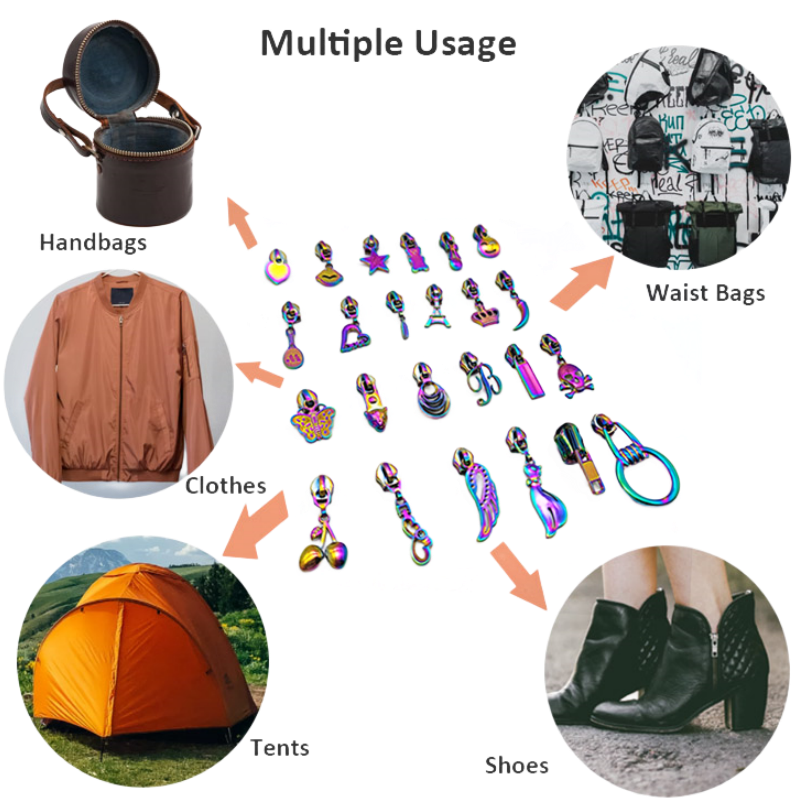
The zipper slider is the core component of a zipper, opening and closing it by sliding up and down.
1. Core Function
Engagement and Separation: The slider's internal structure (such as the Y-groove or needle-shaped teeth) precisely engages with the zipper teeth, ensuring a tight closure or smooth separation of the teeth on both sides.
Operation Control: The zipper is opened and closed manually. Some designs (such as automatic and semi-automatic locks) prevent accidental opening, enhancing safety.
Functional Extensions: Additional modules such as integrated LED lights and reflective strips can be integrated to meet specific needs (such as nighttime locating and outdoor safety).
2. Appearance
Basic Structure
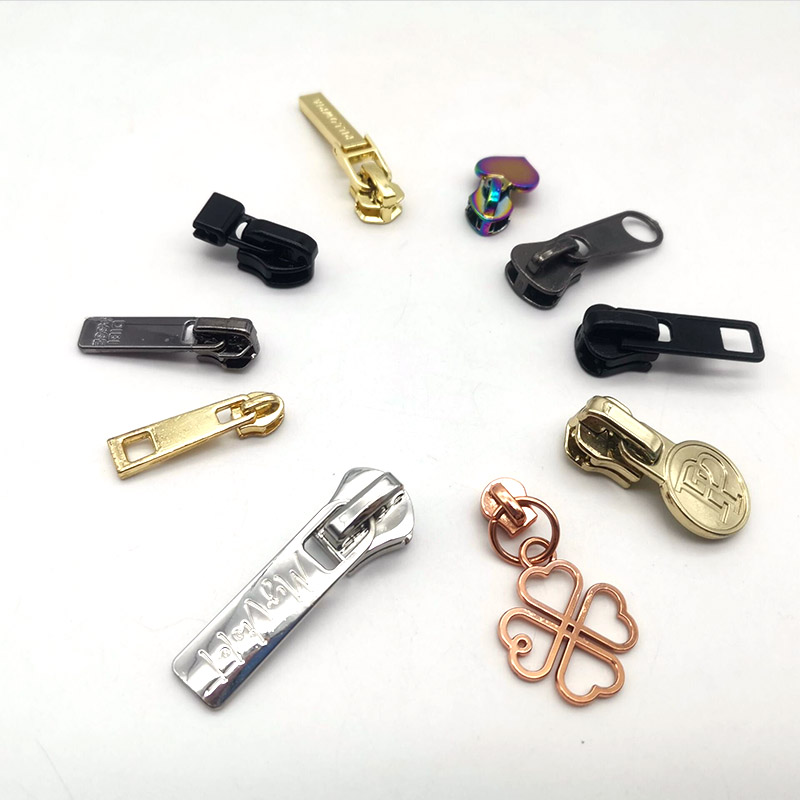
The slider body: Typically rectangular or streamlined in design, its dimensions vary depending on the zipper size (e.g., #3, #5, #8), and is approximately 15-30mm in length.
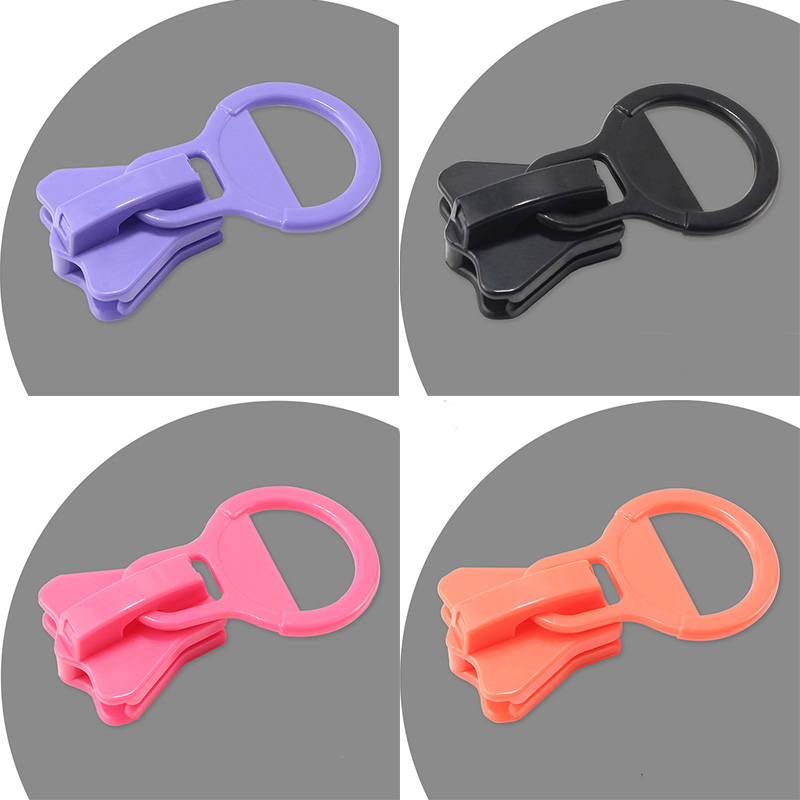
Pull Tab: A ring-shaped or strip-shaped component connected to the slider, providing a force point and available in a variety of shapes (e.g., round, D-shaped, animal-shaped). Locking Mechanism: Automatic locking sliders have a built-in spring latch, semi-automatic locking sliders are controlled by a side button, and non-locking sliders have no additional mechanism.
Material and Craftsmanship
Metal Sliders: The surface can be electroplated (e.g., nickel, chrome, or bronze) or sandblasted to create a matte or mirror finish.
Plastic Sliders: Injection molded in transparent, frosted, or two-color molding, they offer a richer color palette than metal.
Innovative Design
Illuminated Sliders: Built-in LED lights and button batteries automatically illuminate when sliding, solving the problem of finding items in dark environments (such as inside a backpack).
Reflective Sliders: Reflective coatings or webbing enhance nighttime visibility and are suitable for outdoor equipment.
3. Material Types and Advantages
Metal Materials
Zinc Alloy: Low cost, corrosion resistance, and suitable for high-volume production (e.g., clothing and luggage).
Stainless Steel: High strength (tensile strength ≥520 MPa) and wear resistance, commonly used in high-end customization (e.g., luxury goods and industrial equipment). Copper Alloy: Excellent conductivity, supports laser engraving or etching, and adapts to personalized needs.
Plastic Materials
Polyoxymethylene (POM): Highly self-lubricating, with low sliding resistance, suitable for high-frequency use (such as sports equipment).
Nylon (PA): Lightweight (density 1.15g/cm³) and impact-resistant, commonly used in children's products or lightweight bags.
Composite Materials
Metal + Plastic: The slider body is metal, and the pull tab is plastic, balancing strength and cost (such as in budget backpacks).
Silicone Coating: Improves grip comfort, is non-slip, and quiet, suitable for medical or maternity products.
4. Applications
Apparel
Outerwear: Metal sliders with automatic locks prevent wind intrusion; plastic sliders are used for lightweight jackets to reduce costs.
Pants: Non-locking sliders allow for quick opening and closing, suitable for sports; illuminated sliders enhance nighttime safety.
Luggage and Bags
Backpacks: Reflective or illuminated sliders enhance outdoor practicality; custom logo sliders enhance brand recognition. Luggage: The metal sliders are wear-resistant and support smooth operation of large zippers (such as #10).
Special Applications:
Tents/Sleeping Bags: Automatically lock the sliders to prevent accidental opening and ensure a secure seal.
Medical Equipment: Silicone-coated sliders reduce noise and prevent disturbance to patients.
5. Customization Options
Appearance Customization:
Shapes: Available in standard rectangular, streamlined, or custom-shaped designs (such as animals or brand logos).
Colors: Pantone color matching is supported, and the metal sliders can be electroplated with special colors (such as rose gold or gunmetal black).
Surface Treatment: Laser engraving, etching, ink printing, or 3D labeling allows for customized brand logos or patterns.
Function Upgrades:
Locking Type: Choose from non-locking, automatic, or semi-automatic locking to meet diverse security needs.
Add-on Modules: Integrated LED lights, compasses, or thermometers enhance product value.